Planning focusVerify venue electric hook-up availability and ordering deadlines via Visit Tampa Bay's meeting planners hub.
Local requirementCalculate total amperage draws based on booth size, with 1,000-booth capacities at the Tampa Convention Center demanding scalable distribution.
Execution detailSelect lighting fixtures compatible with 30-foot ceiling heights and show-floor compressed-air integrations.
Navigating Tampa Convention Center Utility Infrastructure
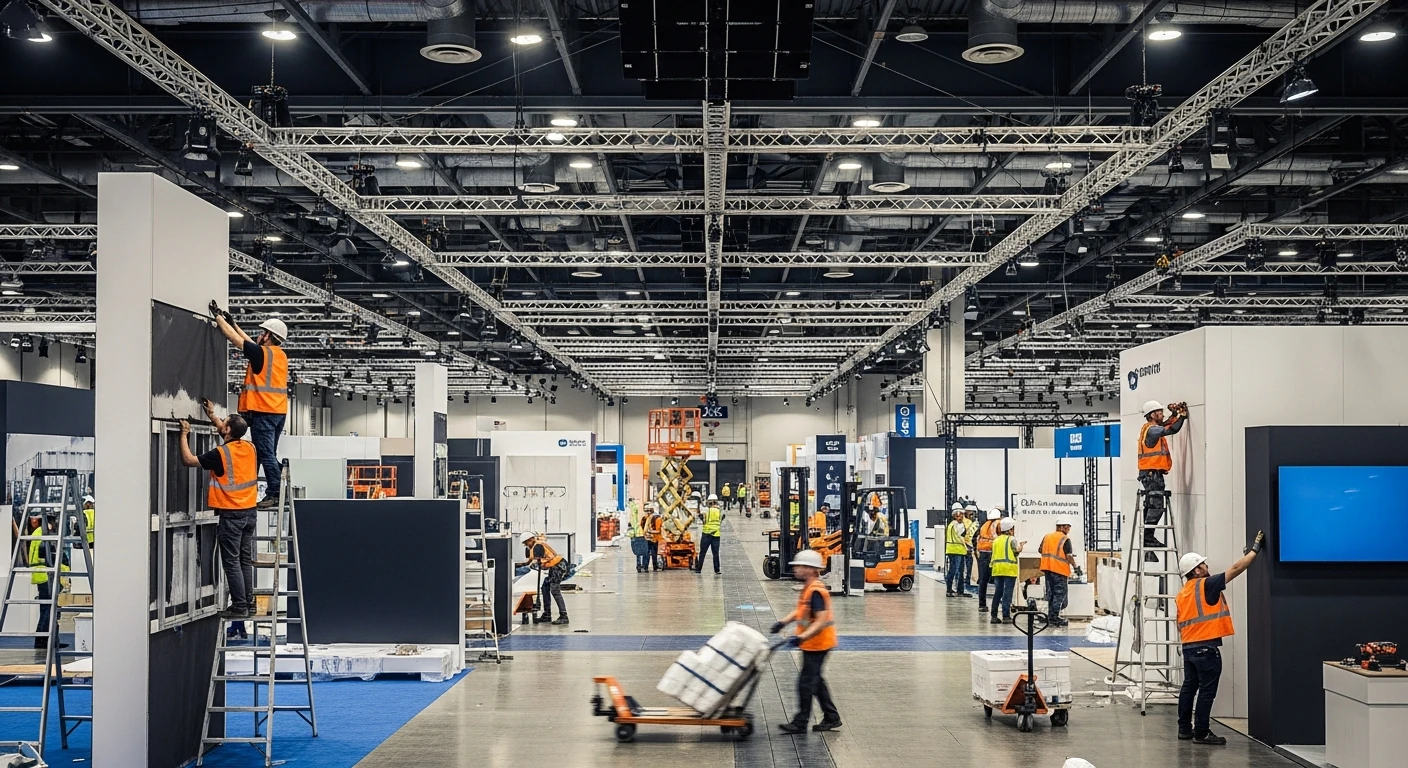
The Tampa Convention Center stands as Tampa's premier waterfront venue with 600,000 square feet of versatile meeting and event space, including a 200,000 Square Foot exhibit hall equipped with electric, water, and compressed-air hook-ups directly supporting show-floor operations. Planners must review the venue's public specifications through Visit Tampa Bay resources to map power access points, ensuring booth lighting schemes—from overhead track systems to under-counter LEDs—align with available drops rated for multiple circuits per island. This 30 Foot Ceiling environment allows for suspended rigging that amplifies focal lighting on displays, but requires precise load balancing to prevent disruptions across configurations holding up to 1,000 10'x10' booths.
Early coordination with the center's operations team confirms house service capacities, particularly for transitions from 3,600-capacity theater setups or 2,080-banquet ballrooms back to exhibit mode, where power demands spike for interactive kiosks and media backdrops. Florida's Right to Work status facilitates flexible exhibitor-appointed contractor involvement, provided all electrical orders pass through official channels to integrate smoothly with the venue's grid.
Distribution planning extends to perimeter booths near cafes and show offices, where ambient lighting must counteract natural waterfront glare while powering demo stations without exceeding shared circuit limits.
- Confirm hook-up locations via facility maps.
- Order power by exhibitor manual deadlines.
- Balance loads across inline and peninsula configurations.
Power Strategies for Florida State Fairgrounds Expos
At the Florida State Fairgrounds, event spaces like the Expo Hall, TECO Arena, Entertainment Hall, equestrian rings, and outdoor areas up to 87,000 square feet host consumer shows and large-format expos requiring distributed power for booth clusters under varying ceiling profiles. Coordinators assess each venue section's electrical backbone through the fairgrounds' event rentals portal, planning for temporary power poles that support everything from halogen floods for wide-area illumination to dimmable LEDs syncing with brand activations in 5,000 Square Foot breakout zones.
The campus's multi-hall layout demands zoned power mapping, especially for programs spilling across indoor-outdoor transitions, where generators supplement house feeds for high-amperage needs like sound systems or projection mapping. Venue-managed workflows via Event Rentals and promoter portals necessitate pre-event submissions detailing wattage per booth, ensuring compliance in Tampa's east-side logistics corridor.
Lighting designs leverage the fairgrounds' flexible footprints by incorporating portable trusses for even coverage, with power daisy-chains rated for rugged, high-traffic floors accommodating diverse exhibitor footprints.
- Map power zones per hall selection.
- Integrate generators for outdoor extensions.
- Submit electrical specs through rentals portal.
Conference Hotel and Resort Electrical Coordination
Tampa's Westshore and east-side conference hotels, including the Seminole Hard Rock Hotel & Casino with its 800 guestrooms and extensive amenities, host sales kickoffs and roadshows where Ballroom to Exhibit transitions require hybrid power setups blending house panels with exhibitor risers. Planners reference public meetings sections from properties like Saddlebrook's 95,000 Square Foot offerings north of Tampa to gauge baseline utilities, focusing on circuits that power recessed cove lighting and podium-integrated outlets without venue overloads.
In Right to Work Florida, coordination with hotel event teams clarifies labor for installations, particularly for custom LED arrays illuminating sponsor walls in gaming-adjacent spaces. Power audits account for 24/7 programming, distributing loads across phases to sustain charging hubs and live demos throughout multi-day events.
These venues' hospitality focus means lighting plans emphasize warm accents for reception-style booths, with power redundancy via PDUs ensuring reliability near pools, spas, and dining areas.
Special Venue Adaptations for Lighting Precision
Downtown cultural anchors like the Straz Center for the Performing Arts and Tampa Museum of Art serve off-site galas and receptions adjacent to convention cores, where power distribution adapts theatrical-grade feeds for exhibit pop-ups. The Straz's Broadway-scale infrastructure supports keynotes flowing into sponsor displays, requiring dimmer-compatible lighting rigs tied to venue dimming systems, while museum settings demand low-heat LEDs preserving artifact proximity in reception layouts.
Coordinators align with facility guidelines to extend power snakes discreetly, powering fiber-optic strands that mimic gallery ambiance for executive dinners or donor events. Florida State Fairgrounds-style outdoor elements at these sites call for weatherproof distros sustaining string lights and strobes through evening programming.
Precision in these special venues hinges on pre-load walkthroughs, confirming GFCI protections and circuit sharing rules for hybrid trade-conference formats.
- Adapt theatrical power for off-sites.
- Use low-heat fixtures near displays.
- Weatherproof for outdoor receptions.
Load Management and Scalability Across Tampa Venues
Scalable power distribution proves critical in Tampa's venue clusters, from the Channel District's waterfront loads to Westshore's airport-adjacent hotels, where booth programs expand from 10'x10' singles to 1,000-unit halls. Planners compute aggregate draws—factoring 20-amp basics for lighting uplights plus 40-amp boosts for video—using Visit Tampa Bay's facilities search to benchmark against convention center specs accommodating 36,000 Square Foot mains.
Florida's open-market labor enables phased rollouts, with distro boards daisy-chained for peninsula and island scalability, always cross-referenced with show manuals for peak-hour surges. Lighting layers, from Key to Fill ratios in high-ceiling expos to task-specific spots in fairgrounds arenas, maintain visibility amid 2,000-plus attendee flows.
Multi-county coverage, including Pinellas and Pasco spillovers, standardizes PDU configs for consistency, mitigating risks in Rocky Point or Ybor City overflows.
Reliability Measures and Venue Rule Alignment
Ensuring uptime in Tampa's trade environments starts with venue-specific alignments, as the Tampa Convention Center's exhibit hall utilities demand ordered hook-ups complementing exhibitor gear. Backup strategies include UPS units for critical demos and generator tie-ins for fairgrounds' largest 87,000 Square Foot spaces, coordinated via promoter portals to sidestep house-service bottlenecks.
Right-to-work flexibility allows pre-fab distros shipped to site specs, tested against 30-foot rigging heights and compressed-air adjacencies. Safety protocols embed arc-fault breakers and thermal monitoring, vital for 600,000 Square Foot complexes hosting Theater to Booth pivots with 3,600-person capacities.
Final checklists verify polarity, grounding, and emergency shutoffs per exhibitor manual, bridging downtown cores with east Tampa's expo corridors.
- Deploy UPS for mission-critical.
- Test generators pre-event.
- Embed safety breakers universally.
Budgeting Power and Lighting in Tampa's Market
Cost-effective planning leverages Tampa venue facts, like the convention center's included hook-ups reducing exhibitor outlays for basic 20-amp services across 200,000 exhibit feet. Advanced lighting—RGB washes for dynamic booths or blacklights for effects—budgets via tiered distros, scaled to fairgrounds' 5,000 to 87,000 Square Foot variability and hotel ballroom norms.
Early RFP responses through Visit Tampa Bay hubs secure bulk pricing on motorgear, while Right to Work coordination minimizes overtime premiums in multi-day installs. Total ownership factors advance warehousing offsets, focusing spend on high-ROI elements like 360-degree lit rotators in 1,000-booth seas.
ROI tracking ties power stability to lead-gen uplift, justifying investments in redundant feeds for interactive hubs in Seminole Hard Rock-style venues.