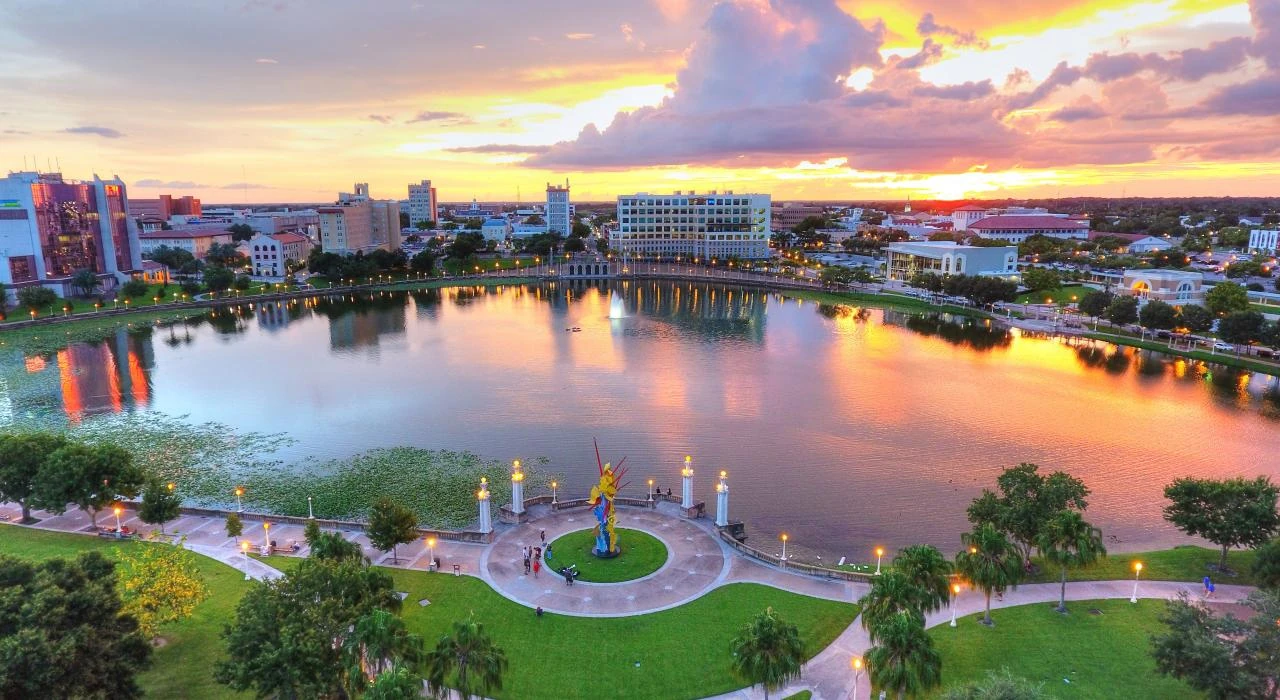
Planning focusRP Funding Center event planning protocols and early coordination requirements
Local requirementIntegration with Visit Tampa Bay meeting planner resources and RFP processes
Execution detailFlorida right-to-work labor environment and venue-managed service distinctions
Lakeland's Role in the Tampa Bay Regional Meetings Market
Lakeland operates as an important overflow and complementary market for trade shows that support the primary concentration of activity in Tampa. The city's location in Polk County places it within convenient reach of Hillsborough, Pasco, and Manatee counties, allowing event organizers to tap into Central Florida attendance pools that also frequent the Tampa Convention Center and Florida State Fairgrounds. This interconnected demand means many exhibitors plan multi-venue campaigns that route material and strategy through the established Tampa infrastructure.
The RP Funding Center serves as the central venue for Lakeland events, offering configurable spaces suitable for exhibits, conferences, and hybrid formats. Its planning resources direct organizers toward structured workflows covering venue selection, technical needs, and operational support. Exhibitors who review these channels in advance position themselves to navigate load-in procedures, service coordination, and post-event requirements more effectively than those who treat the venue in isolation.
Regional coverage strategies that include Lakeland benefit from the proximity to Tampa's 600,000 Square Foot convention facility and its 200,000 Square Foot exhibit hall capable of accommodating up to 1,000 standard booths. This scale contrast allows exhibitors to test concepts in Lakeland before expanding presence at larger downtown or Westshore programs, creating a progressive approach to market engagement across the Tampa Bay area.
- Polk County placement supports I-4 corridor accessibility
- Complements Tampa Convention Center and fairgrounds programming
- Facilitates attendee overlap between secondary and primary venues
- Encourages coordinated regional exhibit calendars
RP Funding Center Event Coordination Fundamentals
Event organizers referencing the RP Funding Center's Plan Your Event resources encounter a structured pathway that emphasizes venue-managed elements including catering, technical services, and facility specifications. This approach requires exhibitors to confirm scopes early, particularly around utility connections and floor management, to align with the specific requirements of each program. Such coordination reduces variables during move-in and enhances overall program reliability.
While the center maintains independent operations, many events there maintain ties to the wider Tampa Bay promotional framework. Planners frequently cross-reference Visit Tampa Bay materials to understand market context, even when the primary venue sits outside the immediate city limits. This practice supports more informed decisions about exhibit scale, audience targeting, and logistical sequencing between Lakeland and Tampa proper.
Operational details such as advance shipping timelines, on-site storage limitations, and dismantle procedures should be mapped against the event's exhibitor manual. Attention to these elements allows for smoother transitions, especially when the same exhibit team supports subsequent shows at the Florida State Fairgrounds or Saddlebrook Resort's 95,000 square feet of flexible space.
Labor Environment and Service Coordination in Polk County
Florida's status as a Right to Work state establishes an open-market labor baseline across Polk County and the broader Tampa Bay region. This constitutional framework ensures that union membership or non-membership cannot be mandated as a condition of employment, providing exhibitors with flexibility when selecting contractors. However, individual venues and events maintain specific rules that must be verified through official channels rather than assumed.
The Tampa Convention Center planning information highlights the importance of confirming utility services and operational scopes with both the venue and show organizer. Similar principles apply at the RP Funding Center, where public navigation directs users to dedicated rentals, catering, and FAQ sections. These resources clarify that final labor conditions depend on the particular event's service contractor, exhibitor manual, and organizer directives.
Hotel and resort venues in the extended market, including those with meeting space comparable to Saddlebrook, typically publish planning guides focused on space capabilities and amenities rather than blanket labor mandates. Exhibitors therefore benefit from reviewing each program's documentation individually to determine appropriate scopes for installation, supervision, and dismantle while maintaining full compliance.
Early identification of exhibitor-appointed contractor permissions prevents conflicts with general service contractors and supports efficient use of specialized skills where needed. This measured approach aligns with the regional emphasis on coordination rather than assumption.
- Florida Right to Work protections apply regionally
- Venue and organizer rules determine specific labor scopes
- Early exhibitor manual review remains essential
- Coordination with utilities and services prevents delays
Logistics Planning Along the I-4 Corridor
The direct connection via I-4 between Lakeland and Tampa enables efficient material movement for exhibits that appear in both markets. Transportation planning should account for typical transit durations, peak traffic patterns, and venue-specific dock access requirements to maintain schedules. This corridor reality supports the routing of trade show elements through Tampa-centered logistics networks even when the display location is in Polk County.
Exhibitors managing multi-venue programs often sequence shipments to optimize costs and reduce handling. Material destined for the RP Funding Center can be staged in coordination with larger Tampa shipments, provided timelines align with each facility's advance deadlines. Such synchronization proves particularly valuable during periods when the Tampa Convention Center, fairgrounds, and Lakeland host overlapping industry calendars.
Return logistics deserve equal attention, especially when exhibits transition from Lakeland to subsequent engagements at Westshore properties, Channel District venues, or the Straz Center. Documented tracking, clear labeling, and contingency timing help maintain control throughout the regional circuit.
Attention to these operational details differentiates programs that flow smoothly from those that encounter avoidable delays at dock doors or during booth transitions.
Utilizing Visit Tampa Bay Resources for Lakeland Programs
Visit Tampa Bay maintains a comprehensive meeting planners hub that delivers convention center specifications, facilities search tools, maps, and RFP support. These resources remain relevant for Lakeland-based events because many regional programs intersect with the core Tampa market. Planners can reference the Tampa Convention Center's waterfront capabilities and the fairgrounds' range of spaces from 5,000 to 87,000 square feet when designing complementary Lakeland activations.
The dedicated convention center section provides concrete details about exhibit hall capacity and infrastructure that inform scalable exhibit strategies. Exhibitors preparing for RP Funding Center shows frequently consult these materials to ensure their programs maintain consistency with the expectations set by larger Tampa gatherings. This cross-referencing supports unified branding and operational standards across the region.
Facilities search functions further assist in identifying suitable venues across Hillsborough, Pinellas, Pasco, Polk, Manatee, and Sarasota counties. The resulting market perspective helps exhibitors prioritize participation, allocate budgets, and develop logistics plans that account for the full spectrum of available spaces and their distinct characteristics.
- Meeting planners hub offers RFP and facilities tools
- Convention center details provide scale benchmarks
- Regional venue data supports integrated planning
- Cross-market calendar alignment improves efficiency
Strategic Exhibit Development for Regional Venues
Exhibit properties destined for Lakeland benefit from modular designs that accommodate the varying dimensions and technical specifications found across Tampa Bay venues. Components that reconfigure efficiently allow companies to maintain visual impact whether installing at the RP Funding Center, within the Tampa Convention Center's expansive hall, or in Saddlebrook's resort meeting spaces. This adaptability reduces fabrication costs while preserving brand consistency.
Graphic communication should be evaluated for relevance to the specific audience profiles that attend Lakeland functions versus those drawn to downtown Tampa, Ybor City, or Pinellas waterfront events. Nuanced messaging that acknowledges regional distinctions often generates stronger engagement than generic approaches. Storage and refurbishment strategies should also factor in the frequency of I-4 corridor transport.
Pre-event planning sessions that map booth footprints against multiple venue floor plans help identify potential adjustments before fabrication begins. Such foresight proves especially valuable when transitioning between ballroom-style setups and full exhibit halls, or when incorporating interactive elements that must meet differing utility and safety requirements.
Post-event analysis from Lakeland shows can inform refinements for subsequent Tampa programs, creating a feedback loop that strengthens performance across the entire regional calendar. This iterative process separates strategic exhibitors from those who treat each venue in isolation.
Best Practices for Exhibitor-Appointed Contractor Success
Effective coordination between general service contractors and exhibitor-appointed contractors forms a cornerstone of successful regional programs. In Florida's open-market environment, clear documentation of responsibilities, timelines, and approval protocols minimizes overlap and supports specialized installation requirements. This becomes particularly relevant when managing complex displays that move between the RP Funding Center and other Tampa Bay locations.
Reviewing each event's exhibitor manual for labor jurisdictions, supervision ratios, and material handling rules enables accurate budgeting and resource allocation. Venues such as the Florida State Fairgrounds and resort properties publish distinct planning pathways that reward those who engage them proactively rather than assuming uniformity across the market.
Contingency planning for potential delays in I-4 transit or dock availability further protects program integrity. By establishing communication channels with all stakeholders well before move-in, exhibitors maintain control and focus on the quality of attendee interactions rather than operational challenges.
- Document scopes and timelines in advance
- Align with venue-specific exhibitor manuals
- Maintain clear contractor communication channels
- Prepare contingencies for regional transport variables